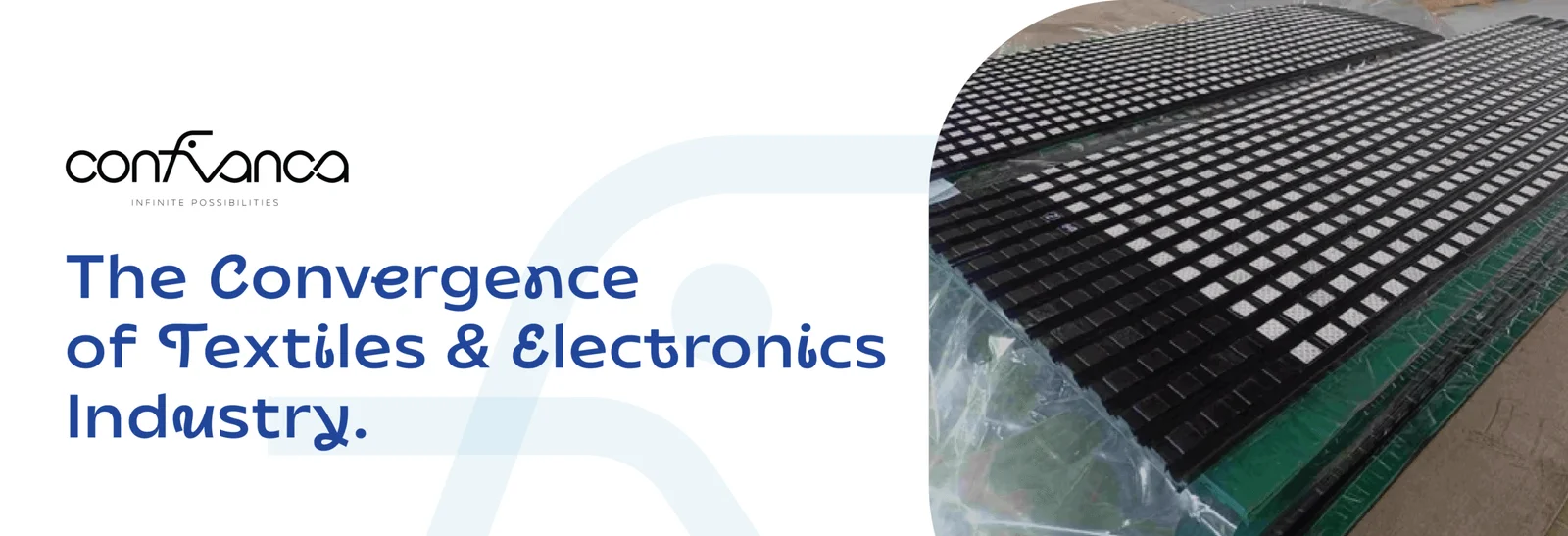
The coming together of technical textiles and electronics is not what immediately catches anyone’s attention but it is precisely where a lot of innovation is taking place. From consumer electronics to industrial automation. Electronic textiles (E-textiles) and conductive textiles are changing applications across wearable technology, flexible sensors, electromagnetic shielding, and smart fabrics. According to studies, the global market for E-textiles is projected to reach $6.5 billion by 2027, growing at a CAGR of 17.5%.
India, with its strong base and legacy in textiles and a rising electronics manufacturing ecosystem, should look at this evolving space with interest.
Key Segments in Technical Textiles for Electronics
Conductive Textiles & EMI Shielding
Applications: EMI shielding fabrics, conductive yarns, static dissipative clothing, RF shielding materials.
- Prevents electromagnetic interference (EMI) in sensitive electronic equipment.
- Enhances safety by providing electrostatic discharge (ESD) protection in high-tech manufacturing.
Major Players: Parker Chomerics, Laird Performance Materials, Toray Industries, Arvind Ltd.
Wearable E-Textiles
Applications: Smart clothing, biometric monitoring fabrics, fitness wearables, self-heating garments.
- Improves real-time health monitoring through integrated sensors.
- Enhances sports performance tracking for athletes.
Major Players: DuPont, Google (Project Jacquard), Loomia, Myant, Reliance Industries. Pain
Flexible Sensors & Printed Electronics
Applications: Flexible circuits, textile-based touch sensors, fabric-integrated NFC & RFID tags.
- Enables lightweight, bendable circuits for advanced wearables.
- Reduces cost and complexity in inventory tracking (RFID in textiles).
Major Players: E Ink Holdings, Tacterion, Sensoria, DuPont Intexar.Pain Points Addressed:
Thermal & Energy-Harvesting Textiles
Applications: Thermoelectric generators, solar fabric, energy-storing textiles.
- Enables self-powered wearables and electronic devices.
- Supports sustainability in renewable energy integration.
Major Players: Pavegen, PowerWeave, Soliyarn, IIT-D (India’s first energy-storing fabric project).
Anti-Static & Electro-Protective Textiles
Applications: Antistatic gloves, industrial ESD protection suits, conductive floor mats.
- Prevents electrostatic damage to sensitive semiconductors and microchips.
- Enhances workplace safety in electronics and aerospace industries.
Major Players: Gore-Tex, Textronics, Shieldex, Dupont.
Build a competitive advantage
- Develop Sustainable E-Textiles: Focus on eco-friendly, biodegradable conductive fabrics.
- Collaborate with Global Players: Strategic partnerships with companies looking to setup manufacturing base in India for the unique advantages it offers.
- Enhance Export Competitiveness: Leverage global partnerships, Indigenous technical textile know-how and strengths to forge strategic partnerships.
Think technical textiles and the growing opportunities in electronics and you see a massive unlocking of possibilities in smart manufacturing, healthcare, and automation.
Strong textile heritage and growing electronics ecosystem makes it a unique opportunity for India. Companies that invest in technology, sustainability and build with a global outlook will ride this wave of innovation.
About Us:
Confianca is a strategic business consulting firm helping companies create sustainable growth and value.